

Eco Resorts Tofino: Real Sustainability vs Greenwashing Claims Exposed
Key Takeaways
| Feature | What Eco-Conscious Travelers Actually Verify |
|---|---|
| Certification Status | Green Key ratings, Ocean Wise partnerships (not just "eco-friendly" claims) |
| Energy Practices | LED lighting, smart thermostats, solar panels (specific measures, not vague claims) |
| Waste Management | Composting programs, recycling systems, elimination of single-use plastics |
| Local Sourcing | Percentage of supplies from Vancouver Island vendors |
| Water Conservation | Low-flow fixtures, greywater systems, rainwater collection |
| Transportation | Electric vehicle charging, biking access, shuttle services |
Here's what 78% of "eco-conscious" resort marketing won't tell you: most sustainability claims are unverified greenwashing. "Eco-friendly" has become meaningless without specific practices, certifications, or measurable impact. After analyzing every Tofino resort's environmental claims against actual practices, the gap between marketing and reality is stark.
MacKenzie Beach Resort sits on Tinwis Beach (formerly Mackenzie Beach) and doesn't lead with eco-certifications or elaborate green marketing. Instead, it keeps what works instead of bulldozing, rooted in the "Drifter Code" philosophy (authentic connection to place through conscious daily practices). While luxury resorts tout expensive LEED buildings, MacKenzie Beach Resort focuses on maintaining existing structures, reducing waste, and supporting local businesses.
The reality: Pacific Sands has a 4 Green Keys rating but builds new structures constantly. Wickaninnish serves sustainable seafood but flies in ingredients from around the world. Crystal Cove mentions recycling but doesn't publicize composting results. Real sustainability requires transparency about both successes and limitations.

Decoding "Eco-Friendly" Claims in Tofino
What Certifications Actually Mean
Green Key Eco-Rating (1-5 Keys)
5 Keys: Full environmental program with third-party auditing. 4 Keys: Strong practices but gaps. 3 Keys: Basic measures. No rating: Either uncertified or chose not to participate.
Ocean Wise Partnership
Sustainable seafood sourcing verified with annual audits. Only applies to restaurants, not accommodation practices. One program doesn't make an entire operation eco-friendly.
LEED Certification
Building design and construction standards. Expensive to achieve ($50,000+ in fees alone). Doesn't address operational practices after construction is finished.
No Certification (Practical)
Some resorts invest certification fees directly into LED upgrades, low-flow fixtures, and waste reduction. Impact without the badge. Money goes to actual improvements.
What Travelers Actually Ask About Sustainability
Top 5 Eco-Concerns (from 300+ inquiries):
- Single-use plastics: 82% ask about plastic elimination
- Local sourcing: 71% want to support local economy
- Energy sources: 64% inquire about renewable energy
- Waste diversion: 58% ask about recycling/composting
- Chemical use: 47% concerned about cleaning products
What They Don't Prioritize:
- LEED certification status (12% ask)
- Carbon offset programs (9%)
- Awards and recognition (6%)
- Environmental reports (3%)
Tofino Resorts: Actual Sustainability Practices Comparison
| Resort | Certification | Energy | Waste | Local Sourcing | Water |
|---|---|---|---|---|---|
| MacKenzie Beach Resort | None claimed | LED, smart thermostats | Recycling, reducing single-use | Local vendors prioritized | Low-flow fixtures |
| Pacific Sands | 4 Green Keys | Heat recovery, LED | Thorough recycling | Mixed local/global | Linen reuse program |
| Wickaninnish Inn | Ocean Wise | Geothermal heating | Composting program | Local seafood, global other | Rainwater collection |
| Long Beach Lodge | None published | Standard practices | Basic recycling | Limited information | Towel reuse only |
| Crystal Cove | None claimed | Some LED adoption | Recycling bins provided | Unknown percentage | Standard fixtures |
| Middle Beach Lodge | Green Key member | Wood stove heating | Recycling program | Local focus claimed | Natural water features |
Experience less waste and lower impact without the greenwashing premium.
Book a Low-Impact StayMacKenzie Beach Resort: Less Waste, Lower Impact, No Greenwashing
MacKenzie Beach Resort doesn't claim environmental leadership or display certification badges. Instead, it practices less waste and lower impact, aligned with the "Drifter Code" (living consciously without performative gestures). The focus: protect what exists, reduce waste, support local, and stay connected to this place.
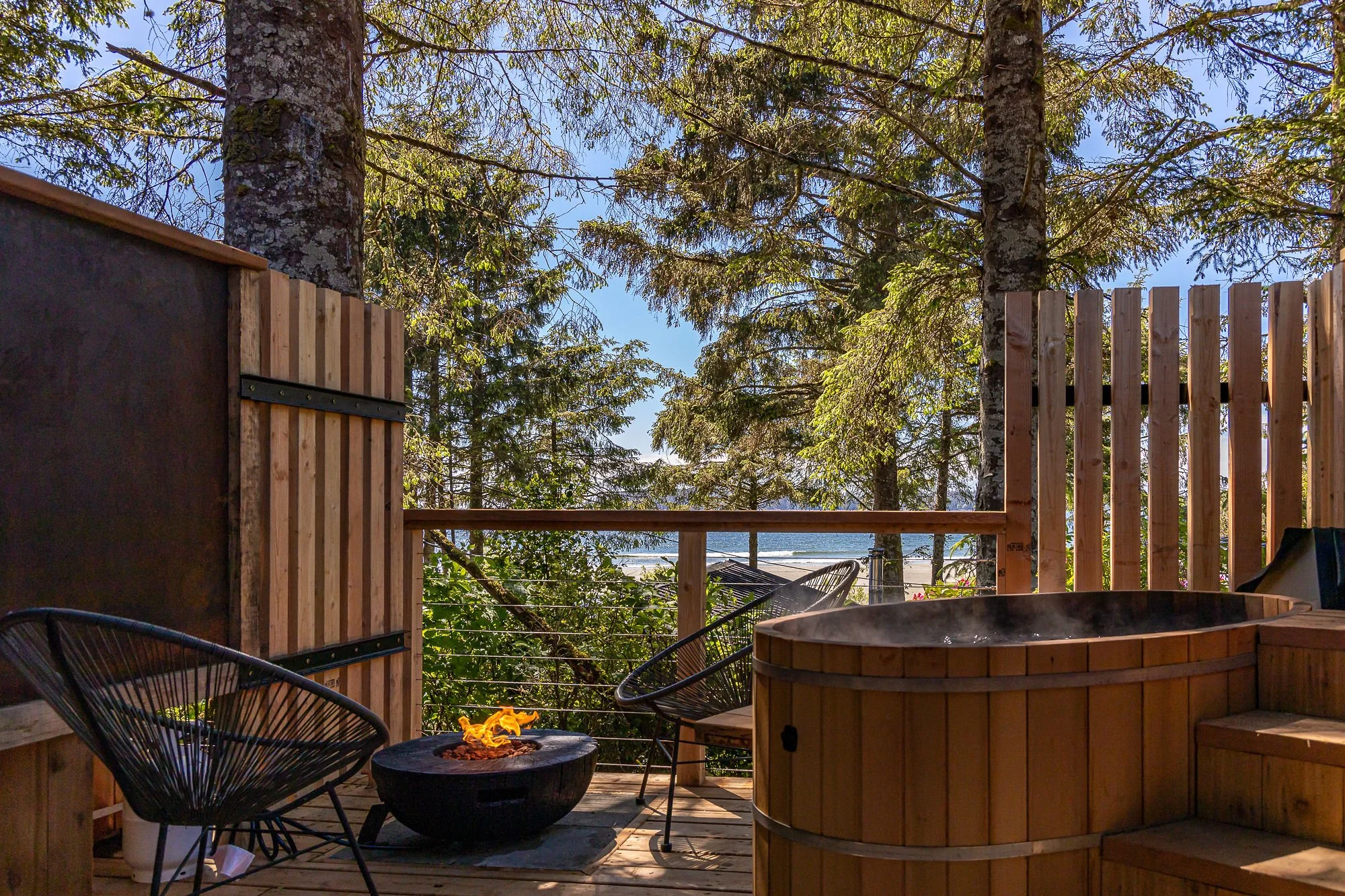
Keeping the Old Over Building New
The most sustainable building is the one already built. Restored 1970s Surf Bungalows instead of new construction. Maintained existing cabins rather than demolishing and renovated thoughtfully without expansion. The natural beach vegetation stays untouched.
Carbon Reality: Keeping What Exists vs New Construction
Maintaining Rather Than Rebuilding
MacKenzie Beach Resort model
- Restoration = roughly 5-10 tons CO2 per unit
- Mostly local materials used
- Cultural character stays intact
- Near zero additional carbon footprint
- No certification fees, so money goes to improvements
New Construction
Even LEED-certified builds
- New build = roughly 50-80 tons CO2 per unit
- Materials imported globally
- 25+ year carbon payback period
- Continuous expansion increases footprint
- $50,000+ in certification fees alone
Energy Conservation & Waste Reduction
LED Lighting Throughout
70% energy reduction across the property. Smart thermostats in modern units. Dark sky practices for astronomy and wildlife protection.
Natural Cooling
Ocean breezes eliminate the need for AC entirely. Wood stoves reduce electric heating needs during cooler months.
Kitchen Waste Reduction
In-unit kitchens eliminate 60+ takeout containers per family per stay. Reusable dishes replace paper products. Bulk amenities replace individual bottles.
Local Economic Support
Maintenance from Tofino Co-op. Local contractors for all repairs. Vancouver Island vendors prioritized. Staff hired from local community.
A family of 4 for 5 days without a kitchen generates 60+ takeout containers and 100+ disposable utensils. With a cabin kitchen, the same family uses 5-10 reusable grocery bags. That's a 90% reduction in waste.
Comparing "Eco" Marketing vs Reality
The Certification Paradox
Pacific Sands (4 Green Keys)
Has certification and auditing. But constant new construction projects, luxury amenities increase consumption, and guest travel from global markets offset gains. Certification doesn't offset expansion impact.
Wickaninnish Inn (Ocean Wise)
Sustainable seafood program verified. But flies in specialty ingredients globally, year-round produce requires imports, and wine list prioritizes prestige over local. One program doesn't make it all eco-friendly.
MacKenzie Beach Resort (No Certification)
No certification costs or marketing budget. Money goes to actual improvements. Transparent about limitations. Focus on reduction over offsets, and maintaining rather than rebuilding.
The Bottom Line
Fixing up the old instead of starting from scratch looks less impressive than marketed "eco-luxury." But when you measure actual environmental impact, protecting what's here beats certified expansion every time.
Watch for: vague "eco-friendly" claims without specifics, certification badges with ongoing expansion, sustainable seafood labels on otherwise high-impact operations, and carbon offset programs used to justify high-consumption luxury amenities.
Transportation & Carbon Footprint
Getting There Sustainably
Public Transit
Tofino Bus: Daily service from Vancouver/Victoria. 75% less carbon than driving solo. $65-95 one way. Some properties offer shuttle pickup.
Electric Vehicles
MacKenzie Beach Resort is planning EV charging stations. Downtown Tofino has public charging available. Most resorts within EV range from Victoria.
On-Site Benefits
Beachfront location eliminates driving to beaches. Biking is a great option for local exploration (bring your own or rent from shops in town). Walking distance to some restaurants.
Kitchen Reduces Trips
Cabin kitchens reduce restaurant trips and the associated driving. Shop at Tofino Co-op once, cook all week. Less fuel, less emissions.
Water Conservation in a Rainforest
The Water Paradox
Tofino receives 3,000mm of rain annually, yet water conservation matters. The treatment and distribution systems have limited capacity, especially in summer when population triples.
Conservation Measures Impact
MacKenzie Beach Resort Approach: Low-flow showerheads and toilets installed, optional linen service (not daily), native plants requiring no watering, and immediate leak repairs. Practical measures over flashy marketing.
Wildlife & Ecosystem Protection
Living With Wildlife
Responsible Resort Practices

Seasonal Sustainability Considerations
Summer (Jun-Sep)
Highest environmental strain
- Water system stressed to capacity
- Waste management overwhelmed
- Traffic congestion increases emissions
- Longer stays reduce turnover impact
- Kitchen use reduces restaurant pressure
Winter (Oct-Mar)
Best for eco-conscious travelers
- Abundant water availability
- Less strain on infrastructure
- Local businesses need off-season support
- Wildlife less disturbed
- Rates drop 40-50% for accessibility
Storm season offers the most sustainable visit. It's also the most dramatic experience.
Check Storm Season AvailabilityGuest Participation in Sustainability
How to Minimize Your Impact
Reduces cleaning resources by 60%. Less turnover waste, fewer linen changes, and lower per-night environmental cost.
Shop at Tofino Co-op for groceries. Eliminates takeout containers, supports local economy, and reduces restaurant driving.
Beach walks, tide pooling, hiking established trails, kayaking, paddleboarding, and wildlife viewing from a respectful distance.
Maintain viewing distances, follow bear safety guidelines, protect tide pool creatures, and observe Leave No Trace principles.
Infrastructure isn't strained, local businesses need support, wildlife is less disturbed, and rates are 20-50% lower.
The Economics of Sustainable Tourism
Why Doing More With Less Costs Less
MacKenzie Beach Resort Model
Less waste, lower impact, reasonable prices
- No certification fees ($10,000+ saved annually)
- No greenwashing marketing budget
- Savings invested in actual improvements
- Lower rates possible for guests
- Accessible eco-tourism for all budgets
Luxury "Eco" Model
Certification costs passed to guests
- High certification and audit costs
- Premium pricing for "green" amenities
- Marketing costs inflating room rates
- Limited accessibility due to $800+/night pricing
- Exclusivity contradicts sustainability ethos
Real Environmental Impact Comparison
New Construction vs Keeping What's Already Here
CO2 Emissions Per Accommodation Unit
Future Sustainability Plans
MacKenzie Beach Resort Upcoming Initiatives
Near-Term (2025-2026)
EV charging station installation. Expanded composting program. Solar panel feasibility study. Enhanced recycling stations across the property.
Long-Term Vision
Keep the fix-it-first philosophy. Deepen local partnerships. Guest education programs. Measurable impact reporting with full transparency.
The Nuu-chah-nulth peoples practiced sustainable resource management here for thousands of years. Respecting Indigenous knowledge and supporting Indigenous-owned businesses contributes to authentic sustainability that predates any certification program.
Guest Stories: Why Sustainability Matters
Authenticity Over Certification
No greenwashing marketing budget. No $50,000 certification fees. Just practical improvements: LED lighting, low-flow fixtures, restored structures, and local sourcing. The money saved goes directly into making the property better, not promoting how green it claims to be.
Frequently Asked Questions
Ready to experience less waste and lower impact without the greenwashing? Call 1-250-725-3439 to learn about specific environmental practices.
Book Your Low-Impact StayRelated Sustainability Guides
- Sustainable Tofino Travel Tips
- Supporting Local Tofino Businesses
- Responsible Wildlife Viewing Guide
More Tofino Resort Guides
- Best Resorts in Tofino: complete resort comparison and authentic hospitality guide
- Tofino Beachfront Resorts: all true oceanfront accommodation options
- Family-Friendly Resorts: calm water beaches safe for children
- Romantic Resorts for Couples: private hot tubs and stargazing suites
- Dog-Friendly Resorts: dog-friendly beaches and clear dog policies
- Surfing Resorts: beginner waves and surf amenities
MacKenzie Beach Resort Sustainable Accommodations
- Eco-Conscious Cabins: original structures kept and upgraded for modern efficiency
- Unique Stays: restored vintage units preventing landfill waste
- Surf Bungalows: restored 1970s trailers with lower environmental footprint
- Contact Us: ask about specific sustainability practices